
One site. Three sets of commitments. Five things a housing project asks you to report.
Apartments, build-to-rent and social housing carry planning conditions, state policy and investor ESG commitments, often on one site. On Victorian public housing tenders released since 1 July 2026, a missed Local Jobs First commitment can count against your next bid. Here is what the contract asks for, and what to have ready.
Why nowOn Victorian public housing tenders since 1 July 2026, a missed Local Jobs First commitment can follow you. Which buildings does it cover?
- Free to download
- Sources named in every paper
- No project or client identified
Built on the policies your contract names, each summarised with its sources at catchment.software/policies.
- Commitments by buildingOne site can answer to the state, a planning approval and a fund.
- Social procurement targetsWhere the percentage is, when the framework does not give one.
- Local content, public housingWhy the completion report is now more than paperwork.
- Women's hours by positionHow a good project average can still hide a miss.
- Green Star and investor ESGWhat the fund and the rating both need, and what changed in May 2026.
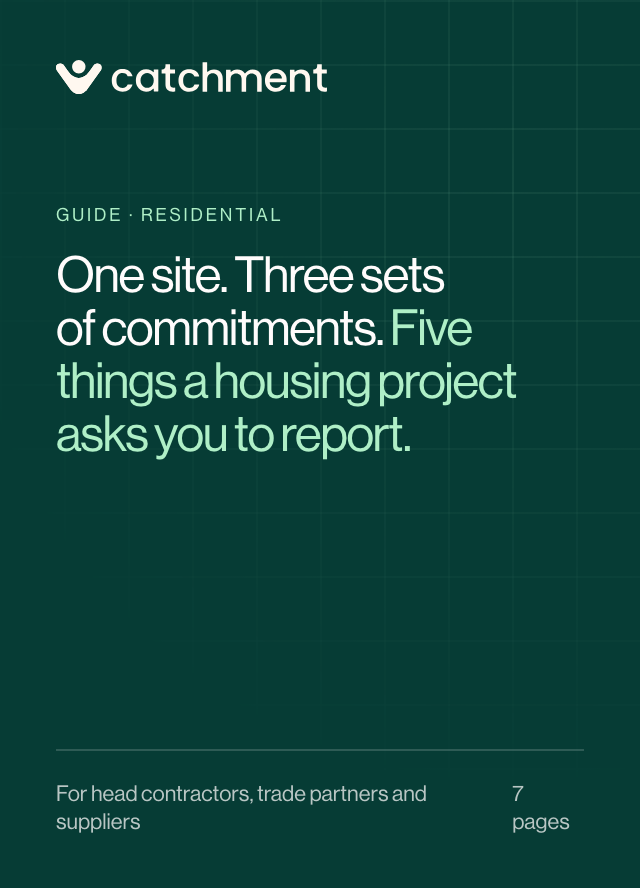
Your Copy Is Ready
Select the button below to open the PDF, then save a copy.
Download the PDFWant to talk through what it means for your projects?
Book a Demo →
One site, three sets of commitments. One now reaches your next tender.
Social and affordable housing programs bring state social procurement targets, and build-to-rent investors bring ESG reporting of their own. On Victorian public housing tenders released from 1 July 2026, a missed Local Jobs First commitment, or a late completion report, can lead to deprioritisation on later tenders.
- Publicly funded project value at which Victoria's Building Equality Policy applies
- $20m
- Minimum share of hours worked by women in each management, supervisory and specialist position
- 35%
- To lodge the Local Jobs First completion report after practical completion
- 90 days
Many builds, many trades, one record.
Residential programs run many builds with many trades at once. On Catchment, every package reports into one record the business can see.
Simple enough for every trade
Trade partners report hours, spend and evidence from any device, in one account they use for every builder. Most finish setup in about 20 minutes.
Across every project in the business
See participation, local content and certified spend by project and package, so a target falling behind shows up early.
Housing targets, tracked
Social and affordable housing commitments, social procurement and Green Star targets are set up once and tracked through delivery.
Evidence for the client and the next bid
Accepted figures with the evidence beside them, for the housing agency or developer, and for your next residential bid.
Six questions to ask on a residential tender
Funding
Which buildings are publicly funded, and which policies follow?
Planning
Which planning conditions need reporting, and to whom?
Targets
Which social procurement targets are in the contract?
General information, not legal, planning or procurement advice. Requirements differ by project and contract; confirm them with your client.
Read it from your seat on the project.
Each role carries a different part of these commitments. Free papers on what the data shows for each one.
 Head contractors34 of 45 Catchment projects missed the same target. What the data means for head contractors.Free download →
 Government agenciesPathways are working. They may also be a ceiling. What the data means for agencies.Free download →
 Private clients and developersIn Catchment's data, a third of social spend sits with one supplier. How solid is the data behind your claims?Free download →
 Trade partners15 of 44 Catchment projects missed a target the trades beat. What it means for trade partners.Free download →
 SuppliersHead contractors can only count suppliers they can verify. How to be one of them.Free download →
 ConsultantsAt least six rules changed in 2026. What to check before you sign off a client's numbers.Free download →