
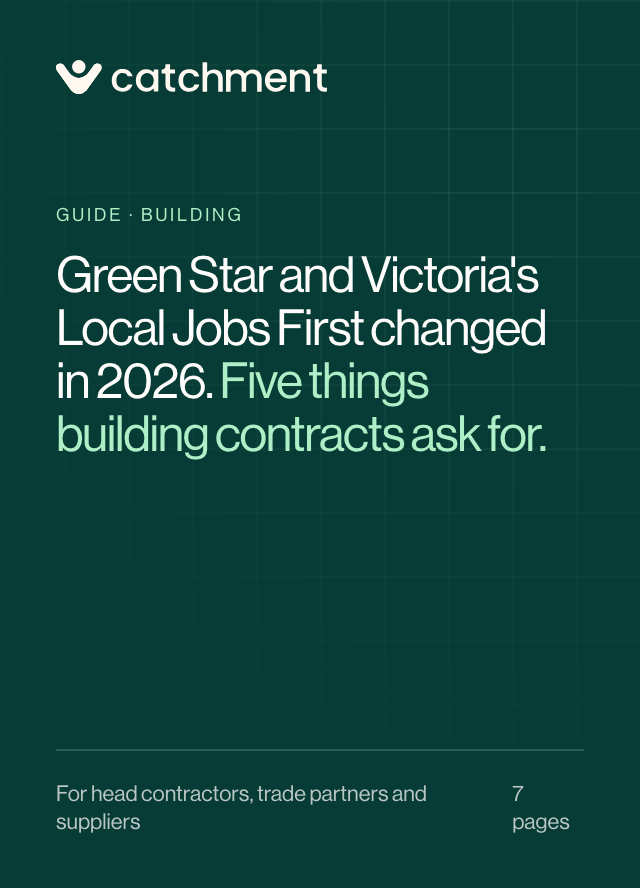
Green Star and Victoria's Local Jobs First changed in 2026. Five things building contracts ask for.
A Victorian public building project can report to the Social Procurement Framework, the Building Equality Policy, Local Jobs First and Green Star at once. Two of those changed in 2026: Green Star Buildings v1.1 from 1 May, and Local Jobs First consequences from 1 July. Here is what each asks for, and what to have ready.
Why nowNew Green Star registrations use v1.1 from 1 May 2026. Victoria's Local Jobs First gained consequences on 1 July. Is your plan current?
- Free to download
- Sources named in every paper
- No project or client identified
Built on the policies your contract names, each summarised with its sources at catchment.software/policies.
- Women's hours, by positionWhy a strong project average can still record a miss.
- Certified spend, with proofThe framework sets no percentage. Your contract does.
- Local content, traced to originWhat local means under Local Jobs First, and where origin gets recorded.
- Green Star v1.1 evidenceWhat changed in Green Star Buildings v1.1, and which credit numbers to use.
- Targets outside VictoriaOther governments ask for the same records under different names and numbers.
Your Copy Is Ready
Select the button below to open the PDF, then save a copy.
Download the PDFWant to talk through what it means for your projects?
Book a Demo →
Several frameworks ask at once. Two of them changed in 2026.
On a Victorian public building project of $20 million or more, a head contractor can carry Social Procurement Framework requirements, Building Equality Policy targets and a Local Industry Development Plan. Where the project also targets a Green Star rating, its credits ask for hard proof of who was employed and who was paid.
- Project value at which Victoria's Building Equality Policy applies
- $20M
- Women's share of hours required in each management or specialist position
- 35%
- Procurement and Workforce Inclusion in Green Star Buildings v1.1
- Credit 36
Every package, every policy, one monthly record.
A building project carries social procurement, gender equality, local content and Green Star at once. On Catchment, every package reports them into one record.
One system for every package
Trade partners and suppliers report hours, spend and evidence monthly into one system. The platform sends the reminders, and the coordinator reviews instead of collects.
Position by position, not just the average
See women's hours by position, local content and certified spend by package, so a trade at zero shows up while there is time to fix it.
Policy targets, set up once
Social procurement, gender equality, local content and Green Star targets are set up once and tracked through delivery, with forecasts beside them.
Evidence for the client and the next bid
Accepted figures with evidence beside them, for your client's reports, Green Star submissions and the social procurement section of your next tender.
Six questions to ask on a building tender
Value
Which thresholds does the project value cross?
Positions
Which positions are on the job, and who fills each one?
Targets
Which social procurement targets are in the contract?
General information, not legal, planning or procurement advice. Requirements differ by project and contract; confirm them with your client.
Read it from your seat on the project.
Each role carries a different part of these commitments. Free papers on what the data shows for each one.
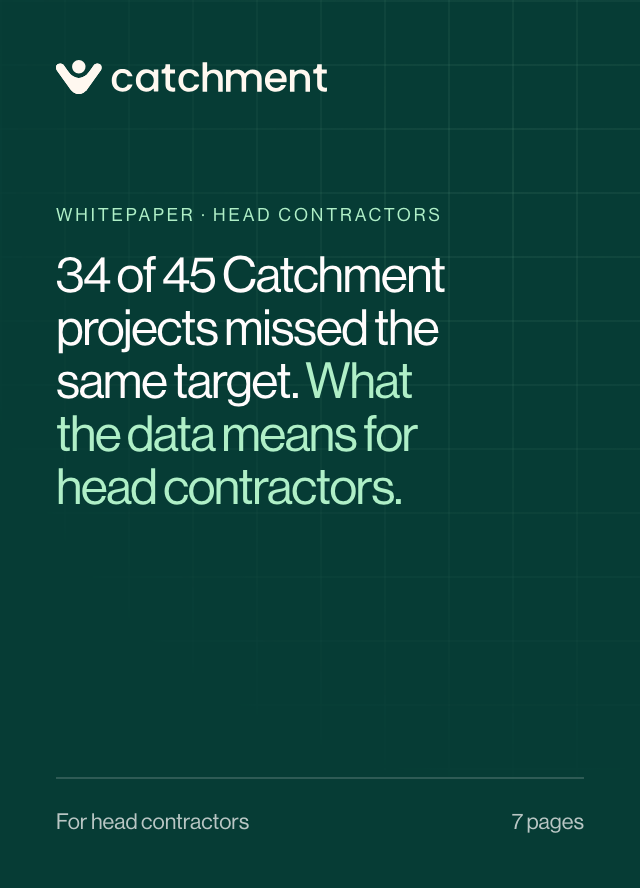 Head contractors34 of 45 Catchment projects missed the same target. What the data means for head contractors.Free download →
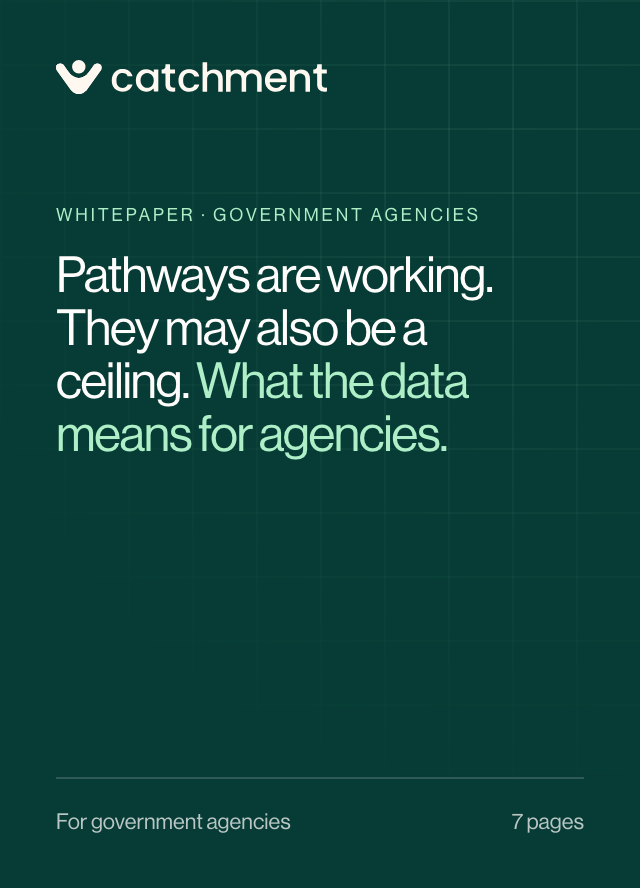 Government agenciesPathways are working. They may also be a ceiling. What the data means for agencies.Free download →
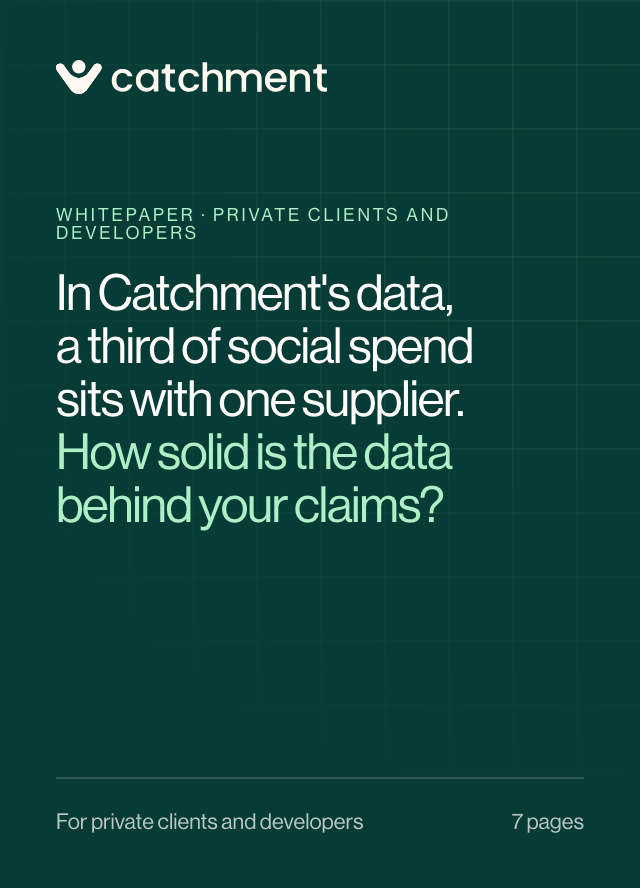 Private clients and developersIn Catchment's data, a third of social spend sits with one supplier. How solid is the data behind your claims?Free download →
 Trade partners15 of 44 Catchment projects missed a target the trades beat. What it means for trade partners.Free download →
 SuppliersHead contractors can only count suppliers they can verify. How to be one of them.Free download →
 ConsultantsAt least six rules changed in 2026. What to check before you sign off a client's numbers.Free download →